
Am I reporting data or interpreting consequences?
Data matters, but the strategic value often lies in what the data means for business outcomes.
Business Acumen
Getting a seat at the table is not the same as influencing the conversation.
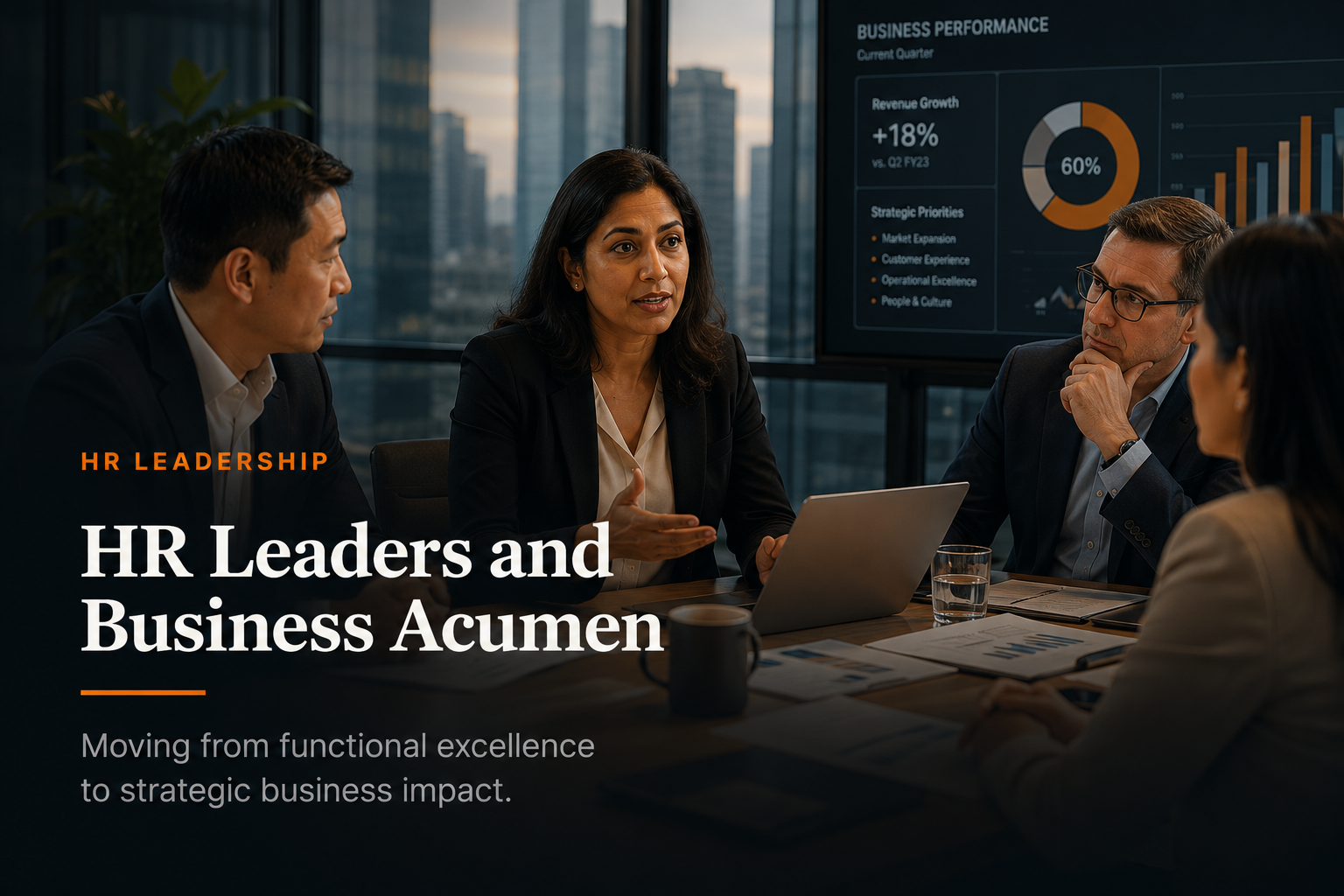
For years, HR has been encouraged to become more strategic. Become a business partner. Understand the business. Earn a seat at the table.
Many HR leaders have done exactly that.
The more interesting question today may no longer be: Is HR at the table?
It may be: Once HR arrives, how does HR influence the conversation?
Because being present in a discussion and shaping decisions are not necessarily the same thing.
Business acumen is often misunderstood as understanding financial statements or industry terminology. Those matter. But business leaders rarely make decisions based on numbers alone.
They also think about growth opportunities, customer realities, execution risks, trade-offs and future capability.
Perhaps business acumen is less about learning the language of business and more about learning to translate human signals into business consequences.
An engagement score is not simply an HR metric. The more interesting question may be: What might this mean for productivity, customer experience, retention or execution?
Attrition may not merely represent people leaving. The question may become: What capability, relationships or organisational memory leave with them?
The most influential HR leaders do not merely translate business language into people initiatives. They translate people signals into business consequences.
Across many Asian environments, another layer can exist. Relationships, hierarchy and credibility may shape influence more than formal role definitions.
HR leaders may therefore occasionally find themselves asking: How direct should I be? How do I challenge respectfully? How do I raise difficult people issues without appearing oppositional?
In many Asian contexts, the conversation before the conversation may matter as much as the formal meeting itself.
Data matters, but the strategic value often lies in what the data means for business outcomes.
Activities become more influential when connected to execution, capability and organisational performance.
Influence begins when HR helps leaders see the people consequences of strategic choices.
Ideas become meaningful when translated into action and experience.
Start With a Conversation