Where are we over-optimising?
Too much exploration can create activity without progress. Too much exploitation can create efficiency without adaptation.
Innovation
The yin and yang of ambidexterity.
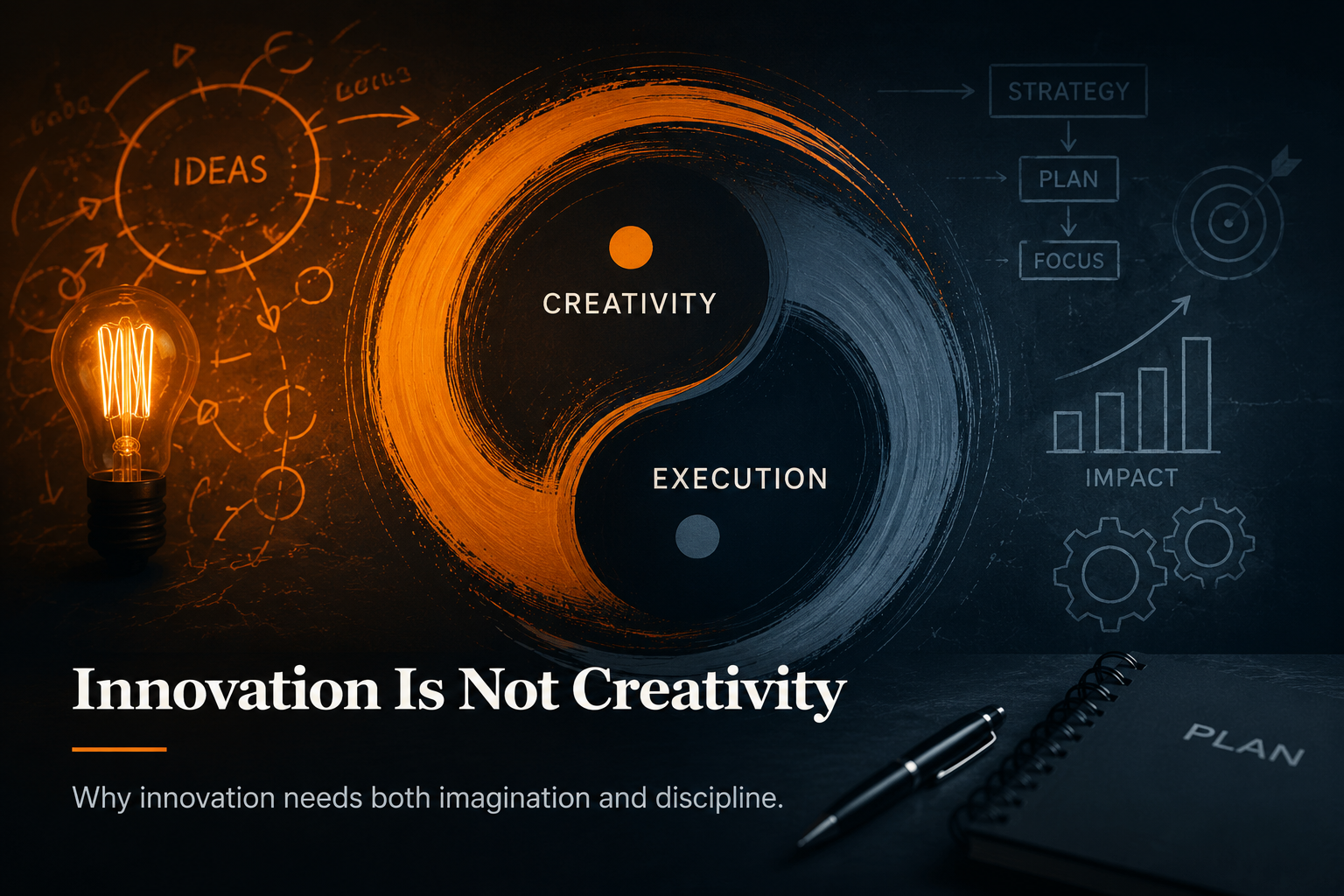
When organisations talk about innovation, conversations often drift toward ideas. More creativity. More experimentation. More brainstorming. More disruption.
Yet organisations rarely create value from ideas alone. Many good ideas remain interesting thoughts on a whiteboard.
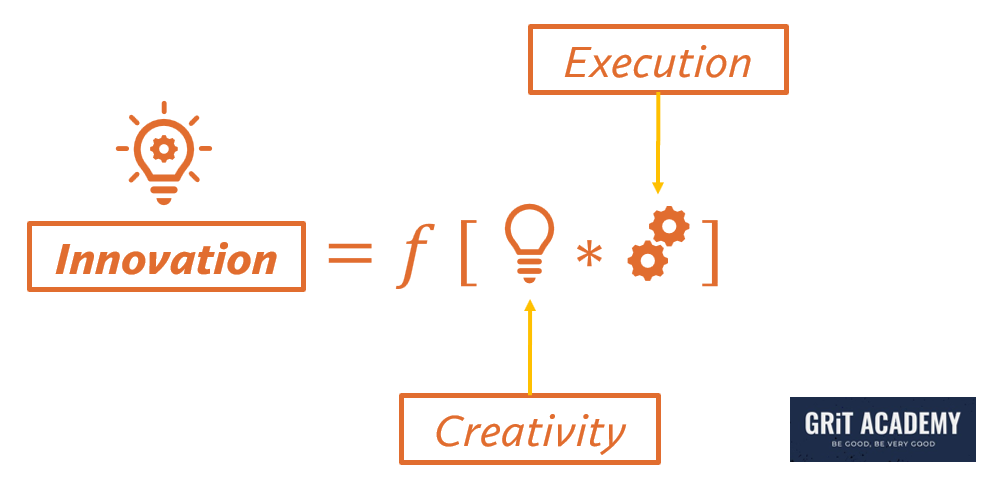
Perhaps innovation is not simply creativity. Perhaps innovation is a function of creativity and execution.
Ideas become meaningful when they are translated into something useful.
Ambidextrous leadership often speaks about balancing two tensions: exploration and exploitation.
Exploration is about discovering new possibilities, experimenting, learning and creating. Exploitation is about refining existing strengths, executing consistently, improving performance and scaling.
People often imagine these as opposites. Choose one. Optimise one. Trade one off against the other.
But perhaps reality is more interesting. Creativity itself often needs execution. An idea without discipline rarely survives. And execution itself frequently requires exploration. Even highly efficient systems need adaptation and improvement.
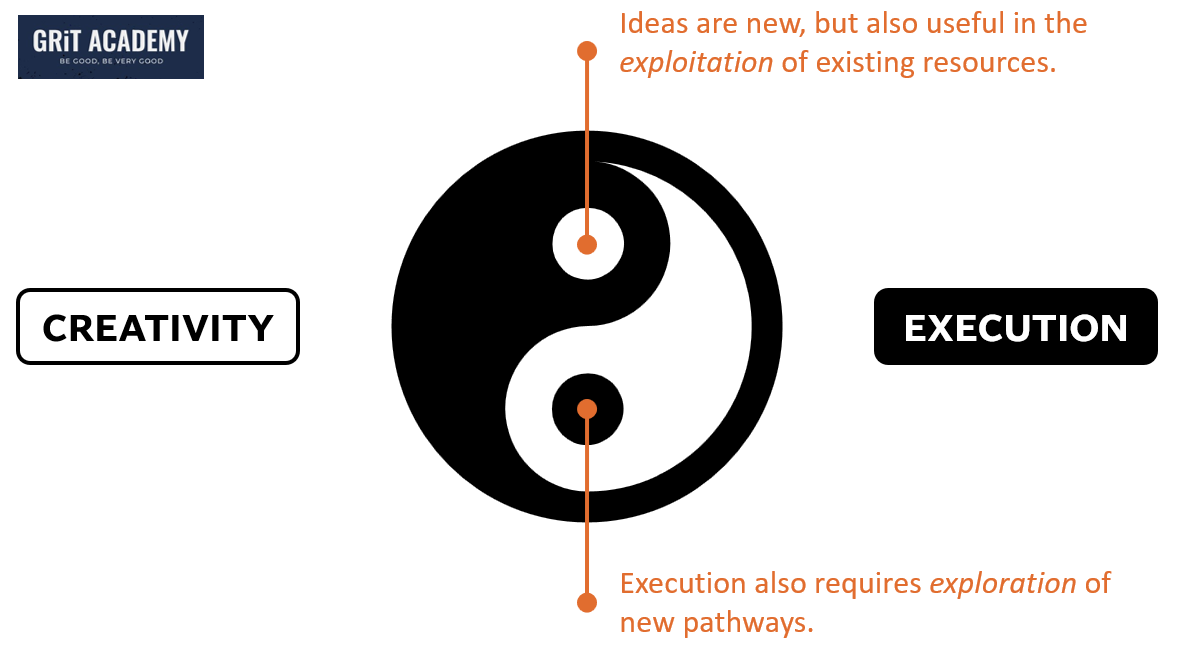
Perhaps innovation looks less like opposition and more like coexistence.
The yin and yang of innovation is not a call for balance in the abstract. It is a reminder that each side needs a trace of the other.
Exploration without discipline becomes activity. Exploitation without imagination becomes rigidity.
The team designing a new product may still need process and structure. The operations team improving efficiency may still need experimentation and new thinking.
The challenge may not be choosing between creativity and execution. The challenge may be understanding when each needs to lead.
Too much exploration can create activity without progress. Too much exploitation can create efficiency without adaptation.
If only certainty is recognised, experimentation may disappear. If only novelty is rewarded, execution may weaken.
Not all tensions need solving. Some tensions create value.
Ideas become meaningful when translated into action and experience.
Start With a Conversation