Who speaks first?
If senior voices dominate early, others may unintentionally narrow their contributions.
Teams & Culture
An Asian leadership perspective.
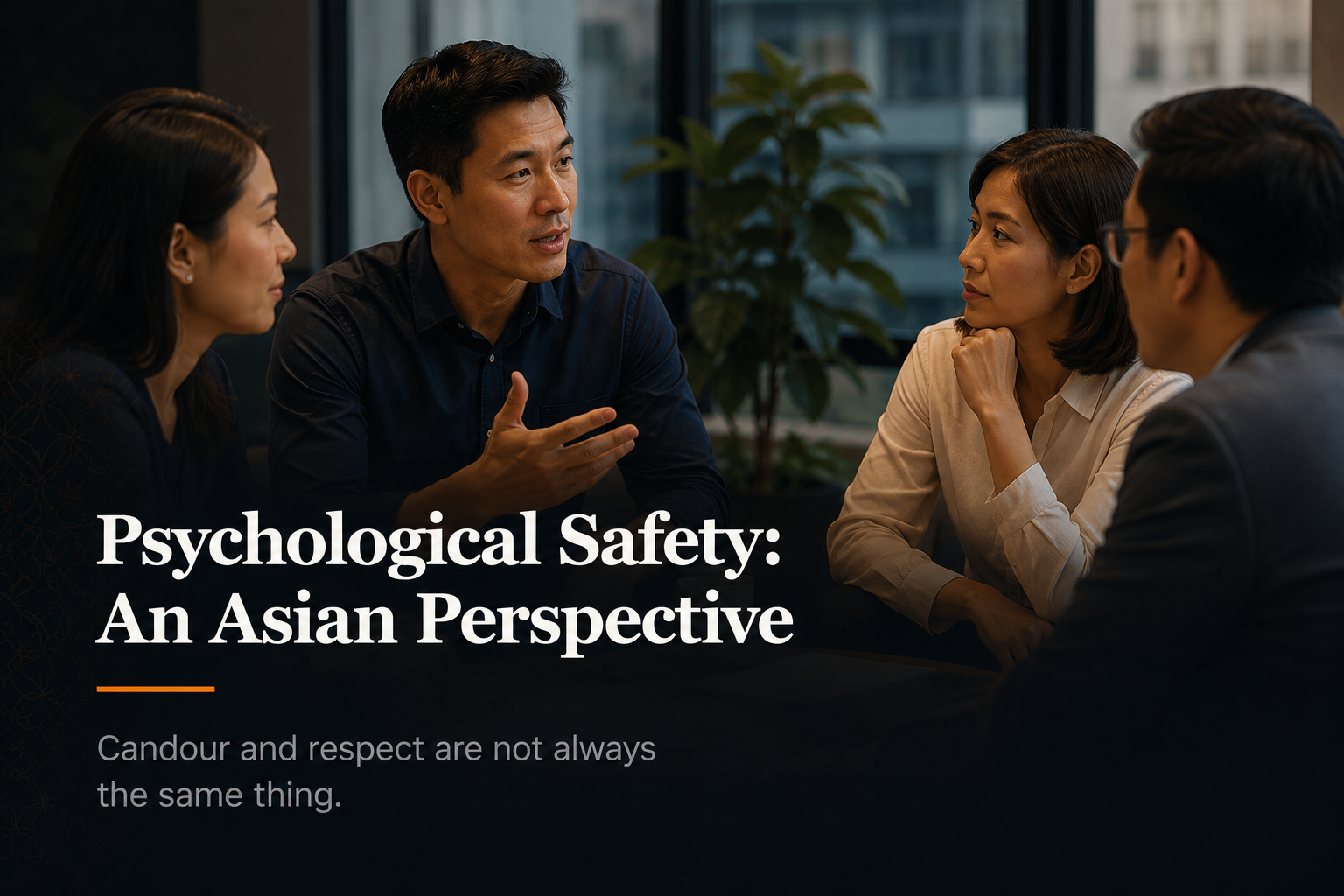
Many teams say they want psychological safety. What they often mean is: I want people to feel comfortable.
But comfort and psychological safety may not be the same thing.
In many Asian contexts, another layer may also exist. People may remain silent not because they lack ideas, but because they are navigating relationships, hierarchy and social expectations.
Silence and agreement are not always the same thing.
Much of the discussion around psychological safety originates from environments where direct challenge and individual expression are relatively common. Yet leadership expectations can differ across cultures.
In many Asian workplaces, people may be asking: Is this the appropriate moment to speak? Will I unintentionally embarrass someone? How will this affect relationships? Am I overstepping?
Psychological safety may therefore not simply involve encouraging people to speak more. Leaders may instead need to create conditions where people feel: I can contribute here without losing face, damaging relationships or appearing disrespectful.
In many Asian contexts, psychological safety is not built by pretending hierarchy does not exist. It is built by helping people contribute honestly within relationships that still matter.
Perhaps psychological safety is not the removal of hierarchy. Perhaps it is the responsible use of hierarchy.
If senior voices dominate early, others may unintentionally narrow their contributions.
Influence in some contexts may happen before meetings rather than during meetings.
People often watch reactions more closely than words.
Ideas become meaningful when translated into action and experience.
Start With a Conversation